
Productised Service Design helps commercial leaders, product marketers, and service design teams address this operating issue: consultants trapped in custom service delivery with unpredictable profit margins. JXING Tech begins with CRM and research sources, agrees the initial measurement method, and documents where exceptions are reviewed. The proposed pilot stays within approved systems and can be compared with the current baseline before expansion.
Why productised service design matters
Consultants trapped in custom service delivery with unpredictable profit margins. Medium-sized teams often see the problem in side spreadsheets and repeated inbox checks. Larger organisations face the same friction across locations and approval chains. A useful starting point is to map delays, owners, and decisions that must remain human.
How the workflow is designed
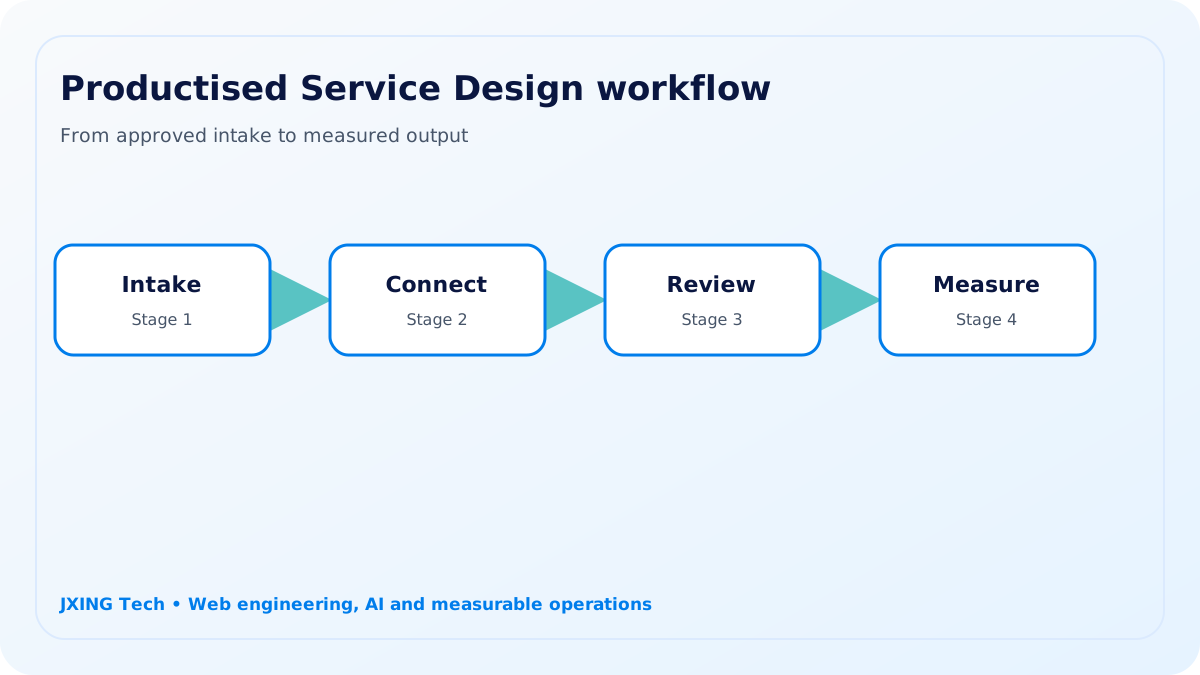
Packages custom, ad-hoc consulting services into standardized, predictable service offerings with fixed SOPs and client portals. JXING Tech connects CRM, research sources, web analytics, and content and experiment records only where access is approved. Rules route normal work, while drafts, uncertain cases, and consequential actions go to named reviewers.
Impact at different business scales
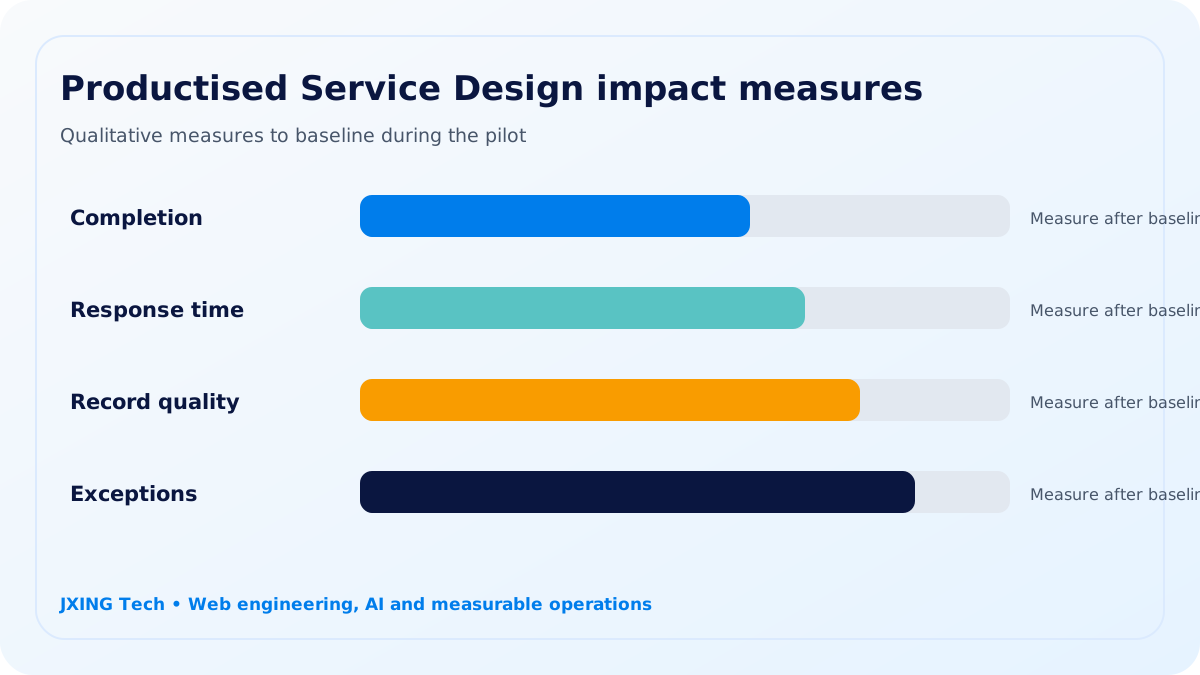
A medium-sized business can test commercial decisions with better evidence before committing a large delivery or media budget. A focused productised service design pilot can test evidence reviewed without replacing the current operating system.
A larger organisation can compare evidence across products, segments, and regions while keeping experiment ownership and approvals clear. Wider use adds identity controls, retention rules, monitoring, and accountable technology ownership.
Industries and operating context
Potential contexts include consulting firms, agencies, managed services, and training providers. Each sector needs its own approval thresholds, record sources, exception paths, and service expectations; JXING Tech does not force identical rules across them.
Implementation and governance
Discovery confirms data sources, roles, integrations, exceptions, and a baseline for tests completed. Client-owned accounts and infrastructure are preferred, while platform usage costs stay separate.
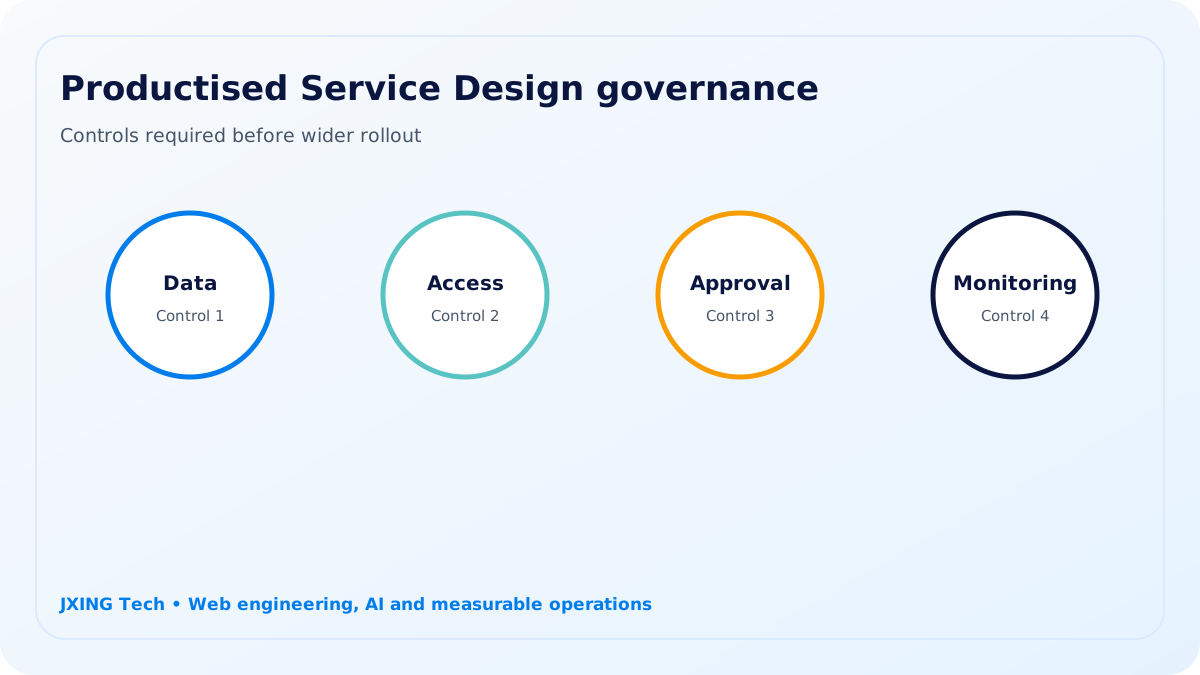
Productised Service Design uses approved data, role-based access, documented review points, and human approval for sensitive or consequential actions. The pilot records evidence reviewed, tests completed, decisions documented, and follow-up actions. Leaders use that evidence to refine, expand, or stop the workflow.
A controlled delivery path
Step 1
Map
Document productised service design owners, delays, approved sources, and the current baseline for evidence reviewed.
Step 2
Authorise
Confirm access to CRM and research sources, including fields that must remain restricted.
Step 3
Pilot
Route uncertain productised service design cases to named reviewers before operational action.
Step 4
Decide
Compare evidence reviewed and tests completed before extending, revising, or stopping the pilot.
Target industries
Each productised service design use case is adapted to sector records, approval thresholds, exception paths, and service expectations.
consulting firms
Use case for consulting firms: manage handoffs through CRM with productised service design.
agencies
Use case for agencies: manage handoffs through research sources with productised service design.
managed services
Use case for managed services: manage handoffs through web analytics with productised service design.
training providers
Use case for training providers: manage handoffs through content and experiment records with productised service design.
What the pilot includes
- Productised Service Design current-state map for commercial leaders, product marketers, and service design teams
- Access and data assessment for CRM and research sources
- Controlled pilot measuring evidence reviewed and tests completed
- Web analytics review interface for named owners
- Productised Service Design QA evidence, fallback plan, and handover recommendation
Governance boundary
Productised Service Design uses approved data, role-based access, documented review points, and human approval for sensitive or consequential actions.
Pilot measures
- evidence reviewed
- tests completed
- decisions documented
- follow-up actions