
Knowledge managers, migration owners, and service enablement teams can use knowledge base migration to examine this recurring problem: fragmented documentation slowing down internal answers and employee onboarding. The first working session confirms access to source knowledge base and target platform, how pilot evidence will be recorded, and the exception path for uncertain results. Any implementation remains measurable, reviewable, and bounded before wider operational use.
Why teams consider knowledge base migration
Fragmented documentation slowing down internal answers and employee onboarding. In a medium-sized operation, the result is often rework and slow preparation. In a larger business, the issue can cross systems, departments, and locations. The case for change depends on evidence from the current workflow.
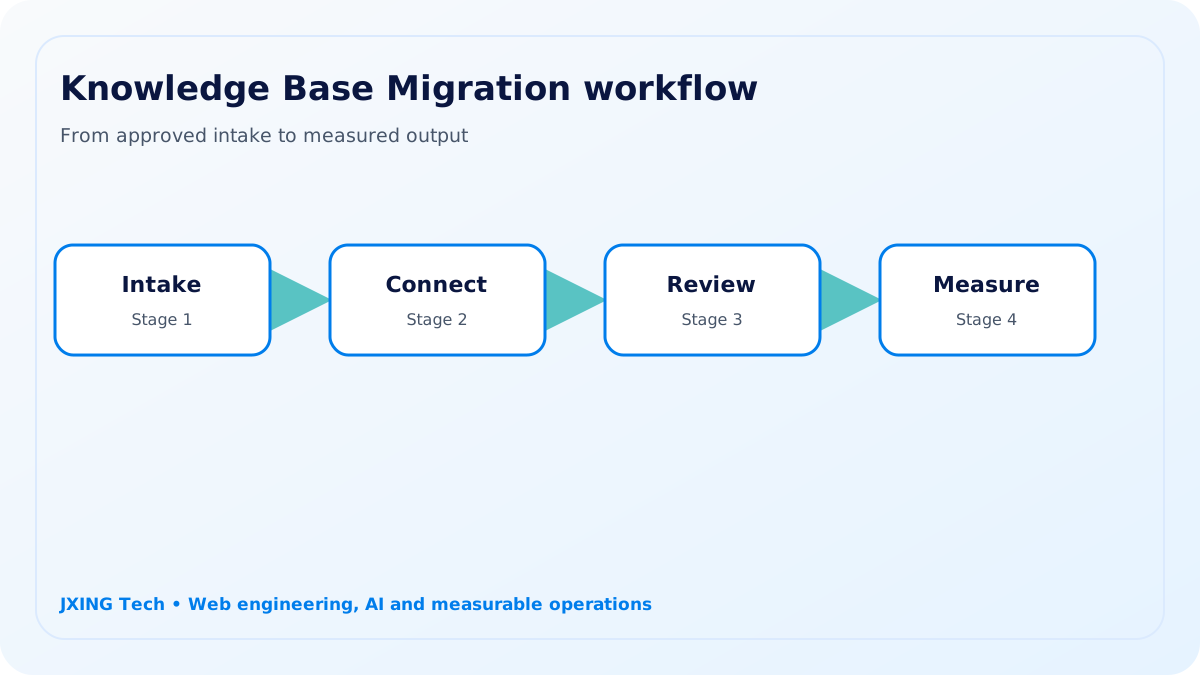
A practical automation approach
The solution consolidates scattered company documentation across Drive, Notion, Slack, and Loom into a single, searchable operating manual. JXING Tech assesses links between source knowledge base, target platform, content inventory, and redirect maps. Routine cases follow agreed rules, while exceptions and high-impact actions remain with accountable people.
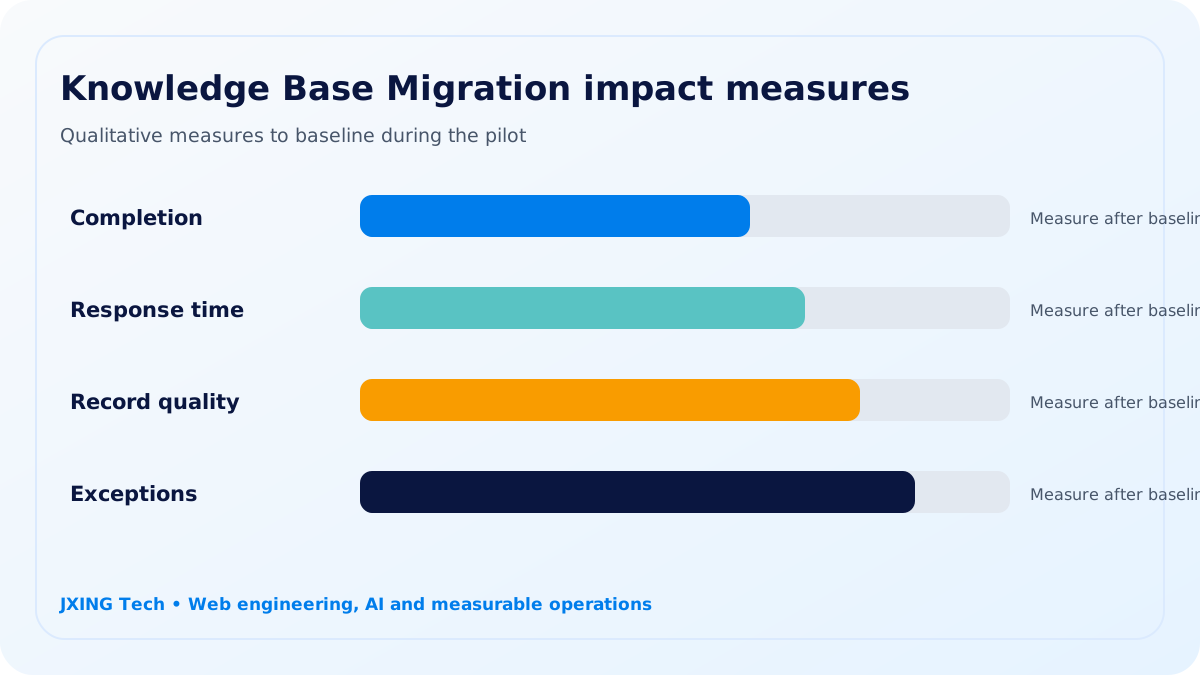
Impact for growing and enterprise teams
A medium-sized organisation can migrate approved knowledge content with a reviewable inventory and ownership model. A medium-sized team can test knowledge base migration against articles inventoried without committing to a company-wide replacement.
A larger business can coordinate content migration, permissions, redirects, and validation across teams and regions. Enterprise adoption adds identity, retention, support, monitoring, and change-management requirements across the operating model.
Industry fit
Relevant sectors include regional enterprises, professional services, manufacturing, and technology groups. Their workflows may share a goal but differ in evidence, privacy, response times, and approval authority. Those differences form part of the implementation scope.
Discovery, pilot and decision point
Discovery records the existing process, data access, user roles, fallback route, and a baseline for content migrated. A controlled pilot then connects only the systems needed to test the use case.
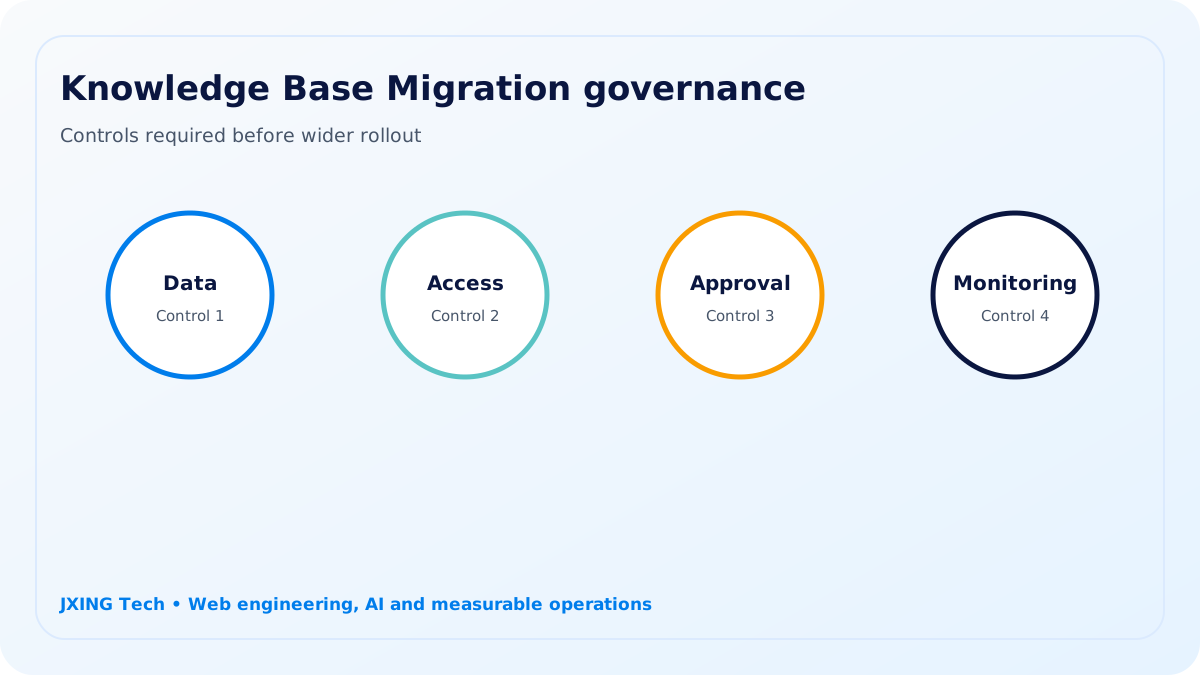
Knowledge Base Migration uses approved data, role-based access, documented review points, and human approval for sensitive or consequential actions. JXING Tech reports articles inventoried, content migrated, links validated, and gaps reviewed so leaders can make a grounded go, revise, or stop decision.
A controlled delivery path
Step 1
Frame
Agree the knowledge base migration question, accountable owner, source records, and reporting method.
Step 2
Link
Prepare a maintainable connection between source knowledge base and target platform with a fallback path.
Step 3
Control
Apply approval gates to sensitive data, external communication, and operational exceptions.
Step 4
Learn
Review articles inventoried and content migrated before making a wider rollout decision.
Target industries
The selected industry determines privacy, evidence, timing, and approval requirements for the knowledge base migration pilot.
regional enterprises
Use case for regional enterprises: manage handoffs through redirect maps with knowledge base migration.
professional services
Use case for professional services: manage handoffs through source knowledge base with knowledge base migration.
manufacturing
Use case for manufacturing: manage handoffs through target platform with knowledge base migration.
technology groups
Use case for technology groups: manage handoffs through content inventory with knowledge base migration.
What the pilot includes
- Knowledge Base Migration current-state map for knowledge managers, migration owners, and service enablement teams
- Access and data assessment for source knowledge base and target platform
- Controlled pilot measuring articles inventoried and content migrated
- Content inventory review interface for named owners
- Knowledge Base Migration QA evidence, fallback plan, and handover recommendation
Governance boundary
Knowledge Base Migration uses approved data, role-based access, documented review points, and human approval for sensitive or consequential actions.
Pilot measures
- articles inventoried
- content migrated
- links validated
- gaps reviewed