
For revenue leaders, sales operations teams, and business development managers, AI lead generation system is a controlled response to sales teams waste effort on irrelevant lead lists and poorly matched outreach. The discovery session traces work between CRM and approved prospect data, agrees measurement ownership, and records the current baseline. JXING Tech then scopes the smallest useful pilot around client-owned platforms and named reviewers.
The operating case for AI lead generation system
Sales teams waste effort on irrelevant lead lists and poorly matched outreach. For a medium-sized company, that can consume management time and hide stalled work. At enterprise scale, inconsistent handling creates reporting and governance gaps. The process should be made visible before automation is introduced.
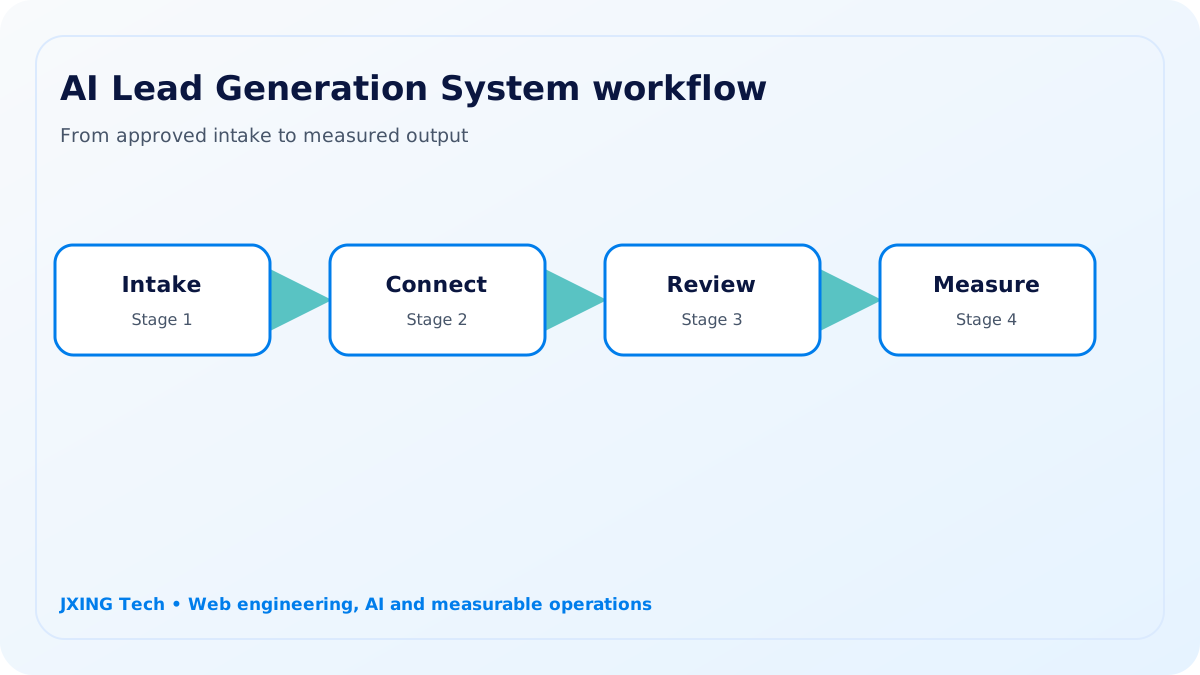
From intake to accountable action
In practical terms, the service uses approved AI research and workflow tools to identify target segments, verify suitable companies, monitor buying signals, score leads, locate decision-makers, and prepare personalised first-touch drafts. Approved connections may involve CRM, approved prospect data, email and messaging, and sales reporting. Clear rules handle routine routing; people review exceptions, sensitive data, and outward-facing decisions.
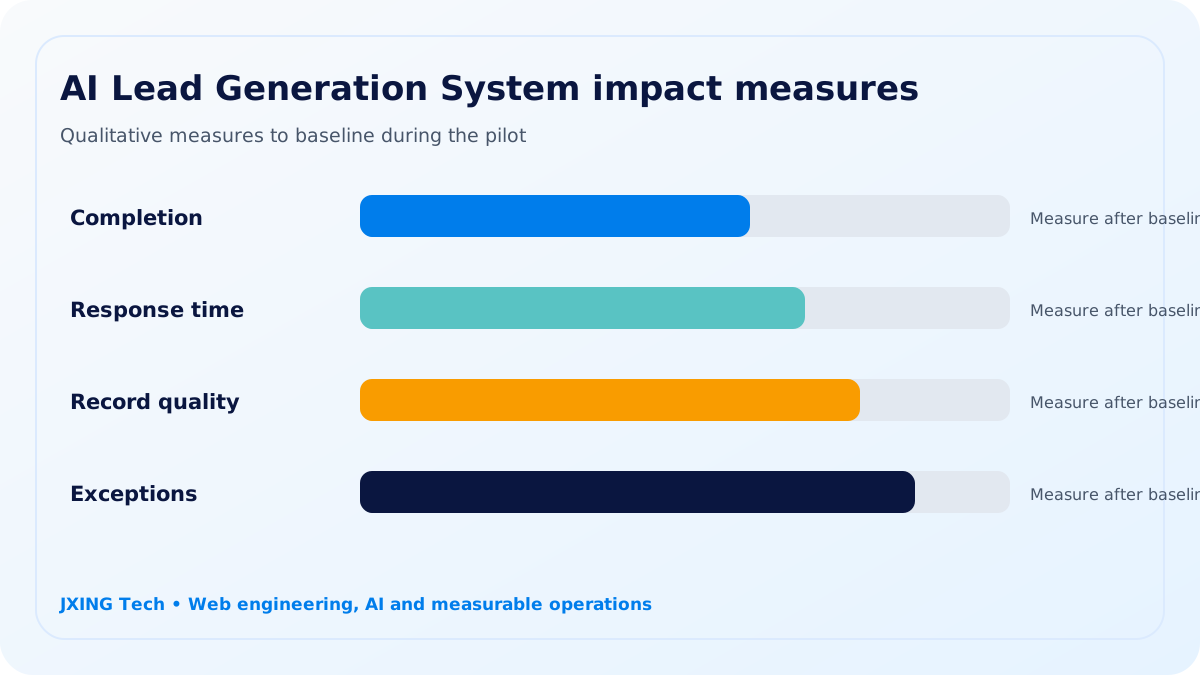
Value for medium-sized and large businesses
A medium-sized business can give a lean revenue team a repeatable operating rhythm without adding another layer of spreadsheets or manual chasing. The initial objective for AI lead generation system is a measurable change in qualified opportunities reviewed within one bounded workflow.
A larger business can apply shared rules across regions, business units, and product lines while preserving ownership, approval paths, and local market controls. Scaling AI lead generation system requires permission models, change control, support ownership, and evidence that teams can operate the new process consistently.
Where the solution can apply
B2B technology, professional services, industrial suppliers, and commercial property are relevant when the same task moves between people or systems. Scope changes by sector: regulated work needs stronger evidence, while multi-site teams may prioritise consistent routing and local visibility.
Pilot scope, controls and measures
JXING Tech maps the AI lead generation system steps, system access, fallback paths, and the baseline for response handling time. The smallest maintainable integration is tested with a controlled user group before broader access.
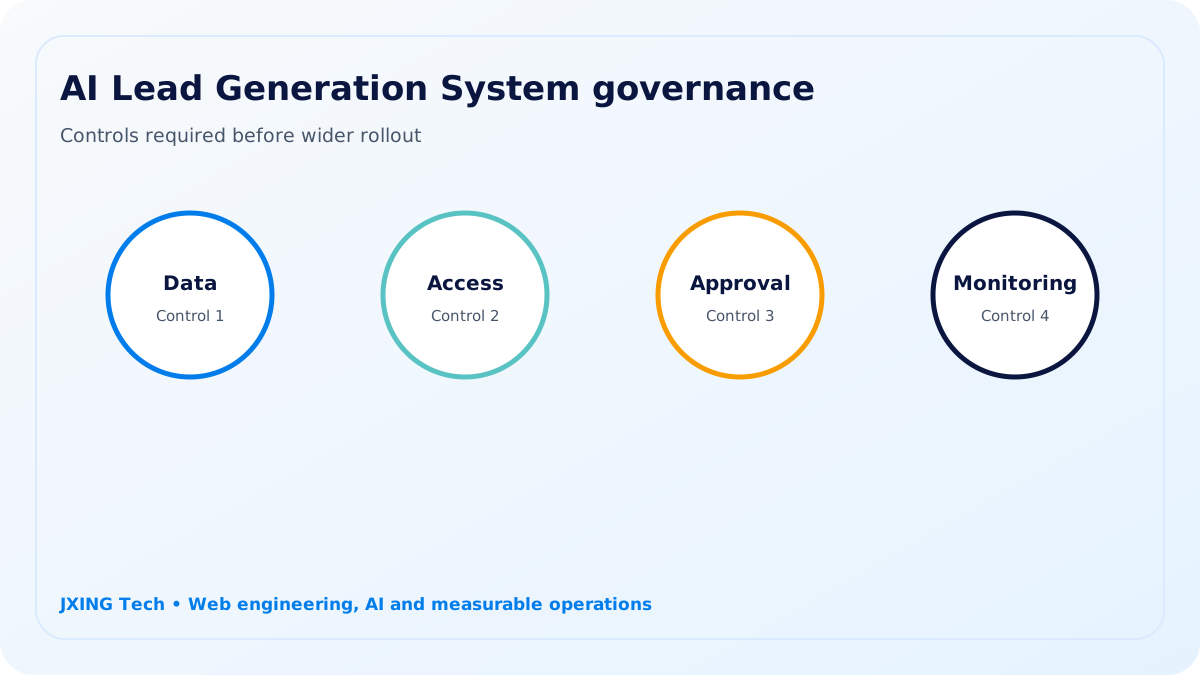
Prospect research and draft preparation must follow approved data sources, contact policies, and human approval before outreach is sent. Monitoring covers qualified opportunities reviewed, response handling time, follow-up completion, and pipeline data completeness; these are operating indicators, not promised commercial outcomes.
A controlled delivery path
Step 1
Trace
Follow the current AI lead generation system handoff from CRM into approved prospect data and identify waiting points.
Step 2
Configure
Set routing rules, user permissions, review thresholds, and measurement ownership.
Step 3
Observe
Run one controlled workflow while owners inspect exceptions and pilot evidence.
Step 4
Review
Use evidence from qualified opportunities reviewed and follow-up completion to choose the next delivery phase.
Target industries
Industry scope changes the evidence, access model, review authority, and response expectations for AI lead generation system.
B2B technology
Use case for B2B technology: manage handoffs through approved prospect data with AI lead generation system.
professional services
Use case for professional services: manage handoffs through email and messaging with AI lead generation system.
industrial suppliers
Use case for industrial suppliers: manage handoffs through sales reporting with AI lead generation system.
commercial property
Use case for commercial property: manage handoffs through CRM with AI lead generation system.
What the pilot includes
- AI Lead Generation System current-state map for revenue leaders, sales operations teams, and business development managers
- Access and data assessment for CRM and approved prospect data
- Controlled pilot measuring qualified opportunities reviewed and response handling time
- Email and messaging review interface for named owners
- AI Lead Generation System QA evidence, fallback plan, and handover recommendation
Governance boundary
Prospect research and draft preparation must follow approved data sources, contact policies, and human approval before outreach is sent.
Pilot measures
- qualified opportunities reviewed
- response handling time
- follow-up completion
- pipeline data completeness